Explicit boundaries
Claims are limited to the data, system assumptions, threat model and validation conditions actually examined.

CyberAI structures research around explicit assumptions, reproducible implementation, measurable evidence and a realistic path from prototype to pilot.
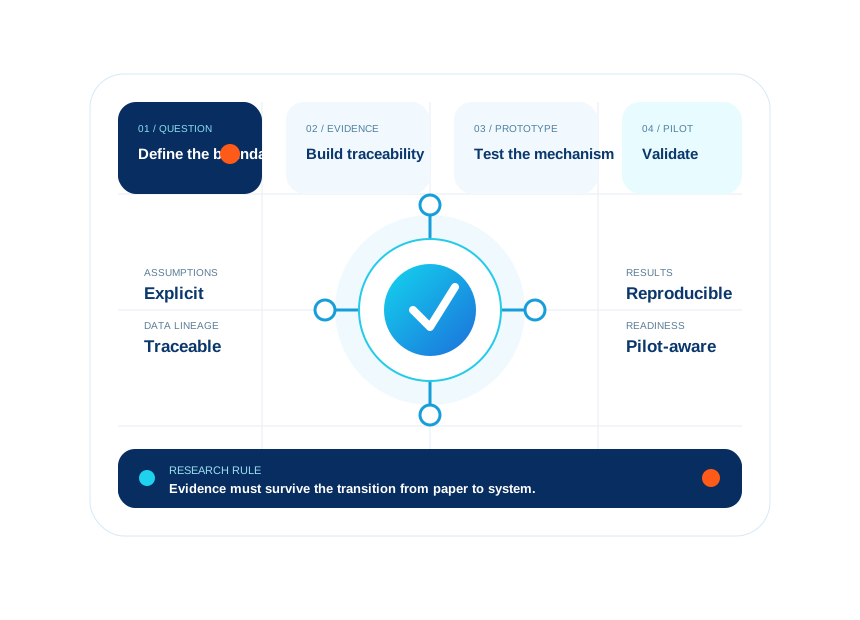
A result is useful only when its boundary, implementation path and evidence can be examined by researchers, partners and deployment teams.
Claims are limited to the data, system assumptions, threat model and validation conditions actually examined.
Implementation settings, baselines, evaluation logic and artefact lineage are documented clearly.
The research question is connected to operational constraints, integration points and pilot decisions.
The workflow is intentionally conservative: evidence quality is prioritised over inflated technical readiness.
Define the mechanism, attacker capability, protected asset and success criterion.
Scope recordedEstablish data lineage, preprocessing, model configuration and reproducibility controls.
Artefacts linkedCompare against meaningful baselines, report uncertainty and document failure cases.
Evidence checkedMap the validated result to a prototype, work package or pilot decision—without overstating readiness.
Readiness statedThe table is a structural model for CyberAI’s R&D portfolio; it does not imply that every theme is already funded or productised.
CyberAI can help structure the question, prototype, evidence chain and pilot boundary for collaborative R&D.